A New Type of Fan Is Reshaping How We Design Sport
Gone are the days when a seat, a scoreboard, and a sausage roll defined the fan experience. In 2026, spectators expect more. More choice. More comfort. More community. More control.
Whether it’s AFL at Marvel Stadium, A-League at AAMI Park, or suburban VFL games, fans no longer come just to watch—they come to belong. And this evolution in fan behaviour is transforming not just event operations, but the very infrastructure of sport.
Designing for the modern fan requires multidisciplinary thinking: architecture, digital technology, crowd psychology, accessibility, revenue strategy and social impact—all woven together to deliver more than a game. At Xsentia, our work across elite and grassroots venues consistently returns to this truth: we don’t just build venues, we build connection.
The Changing Face of Fandom: From Passive Spectator to Active Participant
Today’s sports fans are connected, diverse and digitally fluent. The 2023 AusPlay Report by Sport Australia found that over 40% of attendees aged 18–34 rate atmosphere, food and social experience as equally important as the game itself.
This is a generation raised on customisation. They expect choice—of view, of entry, of snack, of vibe. If stadium infrastructure doesn’t cater to that, they disengage.
This new fandom demands precincts that allow:
- Personalisation: Smart ticketing, mobile food ordering, and seat upgrades
- Socialisation: Decks, terraces, and casual zones over rigid bowl seating
- Connectivity: Fast Wi-Fi, AR overlays, and real-time stat streaming
- Belonging: Inclusive, welcoming environments that reflect modern Australia
To ignore these shifts is to risk irrelevance.
From Arrival to Exit: Every Step is a Design Opportunity
In a fan’s journey, every touchpoint matters. At Xsentia, we consider the entire end-to-end experience when advising on stadium upgrades or precinct planning. Whether it’s overlay infrastructure for a major event, or a permanent fit-out for a high-performance centre, we ask:
- What’s the arrival experience like from train or tram?
- Are wayfinding and signage clear and inclusive?
- Do parents with kids have options beyond general seating?
- Are there places to meet, dwell and celebrate—beyond the final siren?
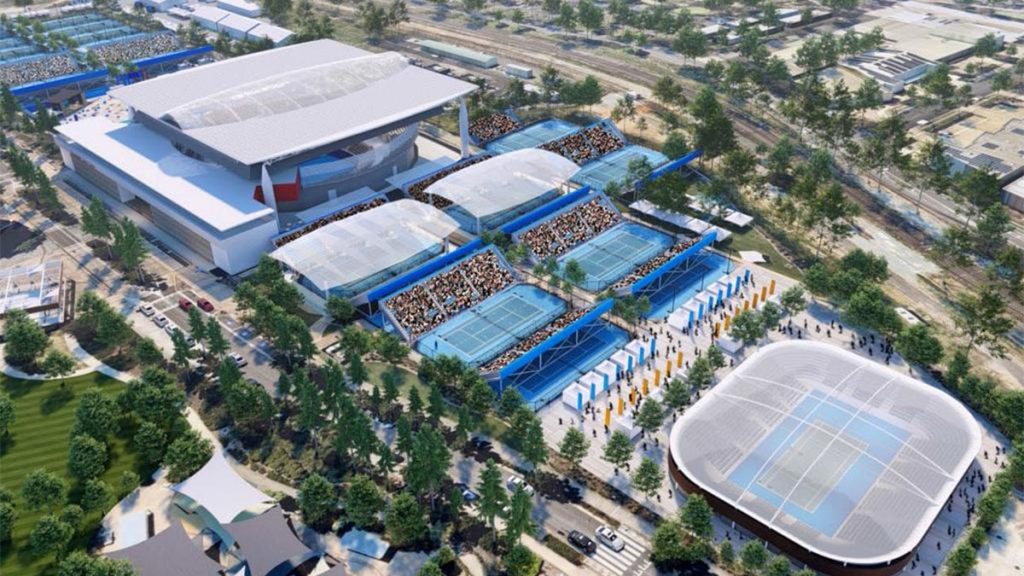
The rise of precinct-style sports hubs such as Victoria Park in Collingwood, the Adelaide Riverbank Precinct, or the Sydney Football Stadium’s forecourt strategy demonstrates this shift in focus.
The fan journey is no longer linear. It’s layered. And infrastructure must reflect that.
Smarter Infrastructure: Building for Connectivity and Adaptability
One of the most overlooked but essential fan expectations is digital performance. A 60,000-seat stadium with patchy Wi-Fi or 4G black spots is more than a nuisance—it’s a reputational risk.
According to McKinsey’s 2023 report on The Future of Fan Experience, digitally enabled fans spend up to 15% more per visit and are more likely to return within the season (source).
This makes a compelling case for infrastructure that is:
- Sensor-integrated: Crowd density mapping to trigger staff redeployments
- Wi-Fi saturated: Especially in concourses, entry gates, and F&B areas
- Digitally layered: Touchless payment, loyalty app prompts, push notifications
- AI responsive: Adjusting air con, sound, or lighting based on occupancy
Investing in these capabilities isn’t just about tech—it’s about responsiveness.
Design That Reflects Culture: Inclusion Is Infrastructure
Infrastructure is not neutral. Every built environment sends a message about who belongs there. That’s why we must be deliberate in designing for cultural inclusion, gender equity and accessibility.
Modern fans expect:
- Gender-neutral and female-friendly facilities
- Spaces for Indigenous identity and storytelling
- Quiet/sensory rooms for neurodiverse attendees
- Lift access, audio loops and adult change facilities
As noted in Infrastructure Victoria’s Inclusive Infrastructure Report (2022), these features not only meet compliance obligations under the Disability Discrimination Act—they expand audience engagement and deepen community relevance.
When we build for inclusion, we’re not adding cost—we’re adding value.
Food, Beverage and the Rise of the Third Half
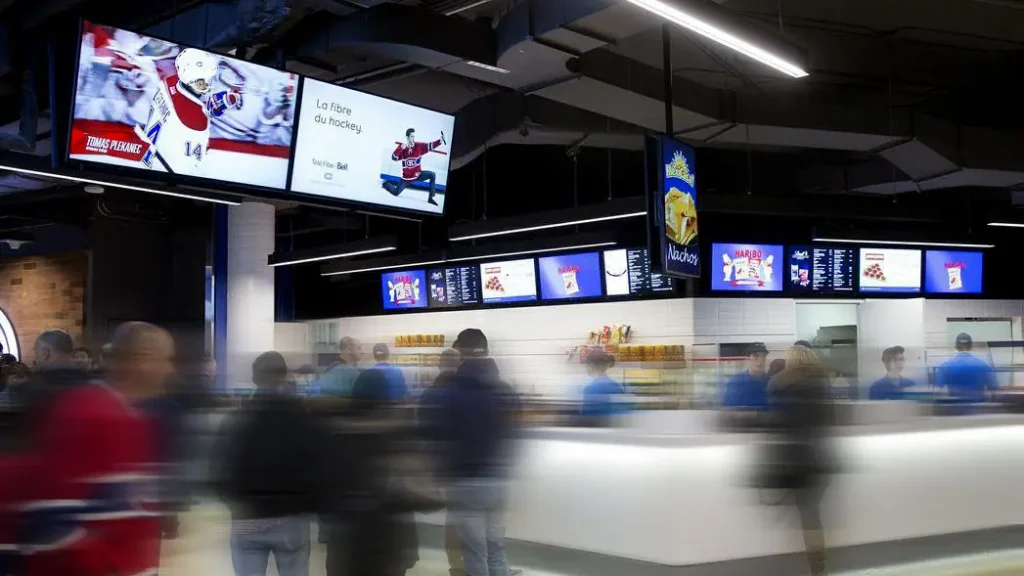
No discussion of fan experience is complete without F&B. The match might be the main course, but food and drink are the entrée and dessert.
Research from KPMG found that fans are willing to spend up to 40% more at venues that provide elevated, localised, and efficient food experiences (KPMG Sport Survey).
The rise of:
- Pop-up vendors
- Local breweries
- Multicultural food trucks
- Click-and-collect from apps
…means that infrastructure needs to be plug-and-play, with:
- Mobile prep areas
- Utility access on hardstands
- Digital POS system integration
- Refrigeration and waste provisions in overlay zones
We’re designing this adaptability into both permanent and temporary builds at sites like Marvel Stadium, Windy Hill, and regional clubroom upgrades across Victoria.
Beyond the Game: Building Precincts for Community and Memory
What happens after the game is as important as the 4 quarters that came before. The “third half” of a fan’s day—time spent socialising before or lingering after—is increasingly tied to precinct design.
Urbis’ 2026 report From Ancient Egypt to Brisbane 2032 identifies “place capital” and “acting with intentionality” as critical factors in high-performing precincts. Places that reflect local identity, enable civic participation, and are activated 365 days a year—not just on game day—outperform generic, event-only models .
In our work, we’ve helped shape precincts that:
- Activate off-season through local sport or pop-up retail
- Offer access to green space, play areas and fitness zones
- Use cultural overlays (e.g. murals, lighting, storytelling) to build place loyalty
Fans don’t just remember scores. They remember how a place made them feel.
A Closing Thought: Don’t Ask “How Many Seats?”—Ask “How Many Moments?”
Designing for the modern fan is not about spectacle alone—it’s about memory, belonging and connection.
It’s about asking:
- What makes this venue feel different from others?
- What does it offer fans who aren’t hardcore or weekly attendees?
- Does it invite community participation, or push it away?
At Xsentia, we work across every layer of this equation—feasibility, design, delivery, and overlay—to ensure infrastructure does more than host a game. It hosts a relationship.
That’s the challenge. That’s the opportunity. And that’s the future of sports infrastructure in Australia.
Suggested Images
- Marvel Stadium social zones with city backdrop
- Fan interaction with tech (e.g. scanning QR, using app)
- Diverse audience enjoying F&B at outdoor concourse
- AFLW crowd moments, junior players watching elite games
- Precinct diagrams showing fan journey mapping