As sport, community and commercial outcomes converge, the Australian sports precinct is evolving fast. Here are six trends shaping the next generation—and how we can plan for them.
Introduction: Why Precincts Matter More Than Ever
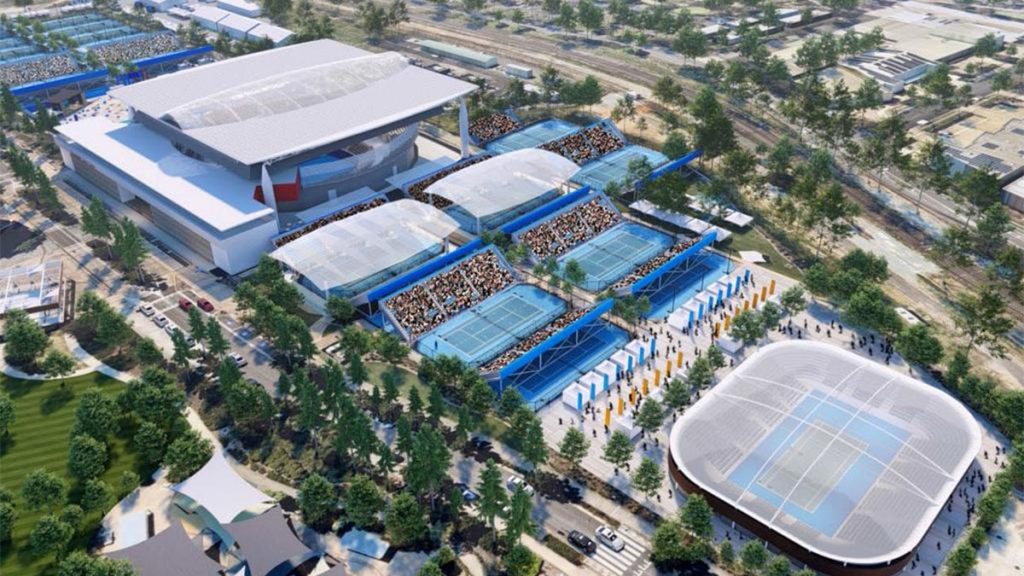
The way Australians engage with sport is changing. It’s no longer about single venues, isolated fields or event-only destinations. Instead, we’re seeing the rise of integrated precincts—multi-use spaces that blend elite sport, grassroots activity, public amenity and private investment.
From Docklands to Sydney Olympic Park, from local ovals to state-funded hubs, the message is clear: sport is a social engine. But to unlock that potential, we must design for a future that is more mixed-use, more sustainable and more human.
At Xsentia, we work with governments, clubs and delivery authorities across the full lifecycle—master planning, stakeholder engagement, business cases, and physical delivery. This article draws on that experience and outlines six key trends we see defining the next decade of precinct development in Australia.
Verticality & Mixed Use
Gone are the days when a precinct was a handful of playing fields and a changeroom. Today, vertical integration is reshaping the footprint of urban sports infrastructure.
Examples:
- Training fields above parking or retail
- Office towers co-located with club headquarters
- Rooftop futsal, basketball or running tracks
- Stadiums with embedded medical, allied health and education tenancies
We’ve seen this in practice at Melbourne’s Harbour Esplanade corridor and Sydney’s Moore Park precinct. These spaces aren’t just for sport—they are working, learning and living environments.
Key considerations:
- Structure loading for fields above podium
- Service integration across tenants
- Operational interfaces between community and elite access
It’s a planning challenge. But it’s also a commercial opportunity.
Gender Equity Embedded in Infrastructure
Sport in Australia is no longer male-dominated—and our precincts must reflect that. But it’s not enough to retrofit change. We must embed gender-inclusive design from day one.
That includes:
- Equal-quality changerooms, toilets and warm-up areas
- Sightline and safety considerations in shared zones
- Multi-use scheduling that enables female competitions at peak times
- Unisex umpire and coach facilities
- Inclusive signage and circulation plans
The Office for Women in Sport and Recreation in Victoria now mandates gender equity in State-funded facilities—and other jurisdictions are following suit.
At Xsentia, we help clients audit their precincts through a gender equity lens, often using the Victorian Government’s Fair Access Policy Roadmap as a benchmark.
Modular & Adaptive Design
Precincts need to scale up and down depending on use—whether it’s a major event, local training, school sport, or off-season activation.
Modular thinking is helping deliver:
- Portable grandstands
- Drop-in lighting
- Retractable fencing
- Hardstands for pop-up infrastructure
- Plug-and-play utility points
We’re embedding these into precinct planning documents from the start. For example, at Windy Hill, our overlays allow for temporary broadcast or media infrastructure to be added on match days without altering the built form.
The benefit? Venues feel “right-sized” every day of the year—not too big, not too small.
Embedded Sustainability
Precincts are long-term investments—and they must align with long-term climate and resilience targets.
Key sustainability trends:
- Water harvesting (e.g. turf irrigation from stormwater)
- Solar canopies over car parks or seating zones
- Electric vehicle (EV) charging and e-bike storage
- Low-carbon construction materials like CLT or recycled aggregates
- Biodiversity buffers between playing fields and urban interfaces
We’ve worked with councils to design sports field upgrades that meet Net Zero by 2045 targets, including carbon budgeting for field lighting and turf management.
But sustainability isn’t just environmental. It includes:
- Inclusive access
- Cultural visibility (e.g. Indigenous design elements)
- Social licence and local procurement
Sustainability must be cross-cutting—not siloed.
Digital & Operational Intelligence
Modern precincts need to work just as hard behind the scenes as they do on game day. That means smart infrastructure.
In precincts, this includes:
- Smart poles with lighting, CCTV, Wi-Fi and call points
- Sensor-based irrigation and lighting for energy efficiency
- Digital wayfinding that adapts for events and crowd flow
- Venue management platforms that integrate bookings, maintenance and communications
At Xsentia, we’ve trialled these across regional facilities, major stadiums and school partnerships. The result: lower operating costs, better safety, and more flexible use.
More councils and State agencies are tying smart readiness to funding criteria. Precincts need to be ready.
Legacy-First Planning (Start With the Long Game)
One of the most common planning mistakes? Designing a precinct for one event, not its 30-year lifecycle.
We take the opposite approach. Start with:
- What the site needs 365 days a year
- What happens when the tournament is over
- What legacy outcomes will deliver participation, health and community uplift
This is especially urgent as Brisbane 2032 approaches. Precincts connected to the Games must be:
- Adaptive for long-term community use
- Commercially viable post-event
- Aligned with local government plans
The Olympic “white elephant” is real. But it’s avoidable—with early, cross-agency planning that prioritises life after the flame.
🛠 Case Examples: These Trends in Action
| Project | Trends Addressed |
|---|---|
| Harbour Esplanade Precinct (Melbourne) | Verticality, precinct mix, club-government interface |
| Windy Hill Umpire HPC (Essendon) | Modular overlays, gender equity, precinct adaptability |
| AFL Club Facility Upgrades (National) | Inclusive design, digital infrastructure, ESG planning |
| State Government Feasibility Submissions | Legacy planning, data-led decision making, community alignment |
Every one of these projects had one thing in common: the brief changed. Because sport is evolving—and precincts must evolve with it.
Stakeholders Need to Collaborate Earlier
Precinct success relies on collaboration across sectors:
- Government – funding, regulation, and community obligations
- Sporting Codes – facility standards and usage planning
- Local Clubs – daily users and community interface
- Operators & Tenants – revenue model and programming
- Design Teams – place integration, compliance, longevity
- Commercial Partners – naming rights, activation, retail or health tenancy
Xsentia often plays the role of translator—connecting strategic intent to design outcomes, and user need to delivery mechanism.
Precinct Planning Framework We Use at Xsentia
Here’s how we guide projects from vision to built form:
- Precinct Vision & Identity – What does the place stand for?
- Facility Strategy & User Mapping – Who needs it now and in 10 years?
- Funding Model – How will it be built and sustained?
- Design Principles – Embedded equity, flexibility and sustainability
- Operational Model – Who manages, activates and maintains it?
- Legacy Outcomes – What does success look like post-handover?
It’s not about buildings. It’s about enabling community, performance and culture.
Build for More Than the Scoreboard
Precincts are more than sport. They are places where stories are told, communities gather, and cultures intersect.
Designing them well means thinking beyond the code, beyond the club, and beyond the first match. It means designing for life—and lives—well beyond the siren.
At Xsentia, that’s the work we do.